Alexander Nathan – E-motion System
A Handshake Language Between Mind and Body

Alexander Nathan
One message, two languages.
Artist, Experiential Systems Designer, & Independent Researcher

E-Motion Navigation Framework
E-motion is organized through five operational levels:
- Level 1 – Orient:
- Establish safety through present-moment awareness and environmental orientation (grounding the framework in reality).
- Level 2 – Explore & Express
- Investigate embodied experience through visual expression, perception, and sensory exploration.
- Level 3 – Handshake & Translate
- Connect and clarity through shared understanding between domains (I.e. through comparison of equivalent outputs)
- Level 4 – Clarity & Reflection
- Develop deeper interpretive understanding through case studies, frameworks, and conceptual mapping (clarity).
- Level 5 – Validate & Secure
- Build structural security through testing, refinement, and future validation systems.

Deeper System Architecture
E-Motion is organized as a nested dual-domain framework exploring how awareness, perception, interpretation, and understanding operate across distinct but interconnected environments.
The system distinguishes between:
- the external environment in which experience occurs,
- the domain currently occupied by awareness,
- and the pathways through which information, meaning, and understanding are exchanged across domains.
The framework moves progressively from:
- orientation,
- to embodied exploration,
- to translation and reflection
- and ultimately toward validation and deeper systemic understanding.

Navigation Section
Explore the Framework
E-Motion begins with orientation.
Level 1 explores how awareness establishes safety through present-moment contact with reality, environment, and perception before deeper exploration occurs.
The framework is organized through three interconnected operating environments:
- Mind Domain (Nest 1)
- Reflection, Interpretation, and conceptual understanding.
- Body Domain (Nest 2)
- Perception, sensation, and embodied awareness.
- External Environment (Nest 3)
- The surrounding reality in which experience and exchange occur.
Awareness may occupy one domain at a time while continuously exchanging information across boundaries through perception, reflection, and translation.
Level 1 establishes the foundational orientation required for:
- embodied exploration (Level 2),
- translation and understanding (Level 3),
- reflective clarity (Level 4),
- and future validation systems (Level 5).
The visual studies, frameworks, and case studies progressively explore these relationships through deeper operational layers.
This layer explores lived experience through visual art, immersive studies, and emotional expression.
This layer focuses on how experience is:
- felt,
- perceived,
- sensed,
- and navigated
within the Body Domain.
Som works explore:
- grounding,
- connection,
- sensory awareness,
- and environmental exchange
Others investigate:
- tension,
- perception,
- memory,
- internal movement,
- and the relationship between safety and expression
Rather than explaining experience conceptually, Level 2 explores how awareness recognizes meaning through direct embodied engagement.
The visual studies act as experiential pathways into the deeper handshake between body awareness and mind clarity
Level 3 explores the handshake between body awareness and mind reflection.
This layer translates experience into maps, figures, frameworks, and conceptual tools that help connect perception, understanding, and communication across domains.
The visual systems are designed to explore:
- awareness,
- attention,
- grounding,
- perception,
- reflection,
- and the relationship between body, mind, and environment.
Rather than replacing experience, these frameworks are intended to organize and translate it without removing depth.
Level 3 acts as the understanding pathway between:
- embodied exploration (Level 2)
and - reflective clarity (Level 4).
The goal is not simplification through reduction, but clarity through translation.
Level 4 explores deeper understanding through reflection, interpretation, conceptual integration, and structured explanation.
This layer brings the visual, experiential, and translational systems together through:
- case studies,
- publications,
- workshops,
- frameworks,
- and cross-disciplinary applications.
The focus shifts from direct embodied exploration toward:
- reflective clarity,
- communication,
- integration,
- and deeper interpretive understanding.
Level 4 investigates how experience can be:
- organized,
- translated,
- contextualized,
- and shared
without losing the complexity of the original experience itself.
These systems act as reflective pathways between:
- experiential awareness,
- conceptual understanding,
- and broader interdisciplinary communication.
Level 5 explores how experiential systems can be refined, measured, and collaboratively expanded through testing, reflection, and interdisciplinary exploration.
This layer focuses on building conceptual security through:
- prototype development,
- experimental frameworks,
- physiological feedback systems,
- workshops,
- publications,
- and future collaborative research initiatives.
The goal is not to reduce human experience into abstraction, but to develop exploratory systems capable of translating experiential awareness into measurable understanding while preserving the complexity of lived experience.
Current development pathways include:
- future testing systems,
- E-Motion Testing Prototype,
- and long-term E-Motion Lab initiatives.
Level 2 – Domain Exploration Examples
The visual expressions explore how distinct domains perceive, process, and express experience through different exploratory environments.
Mind Domain Oriented Exploration

VS1 Exploring connection (mind domain)
Visual Study with Visual Expressions
A visual study exploring the repair of self-connection while oriented in the Mind Domain.
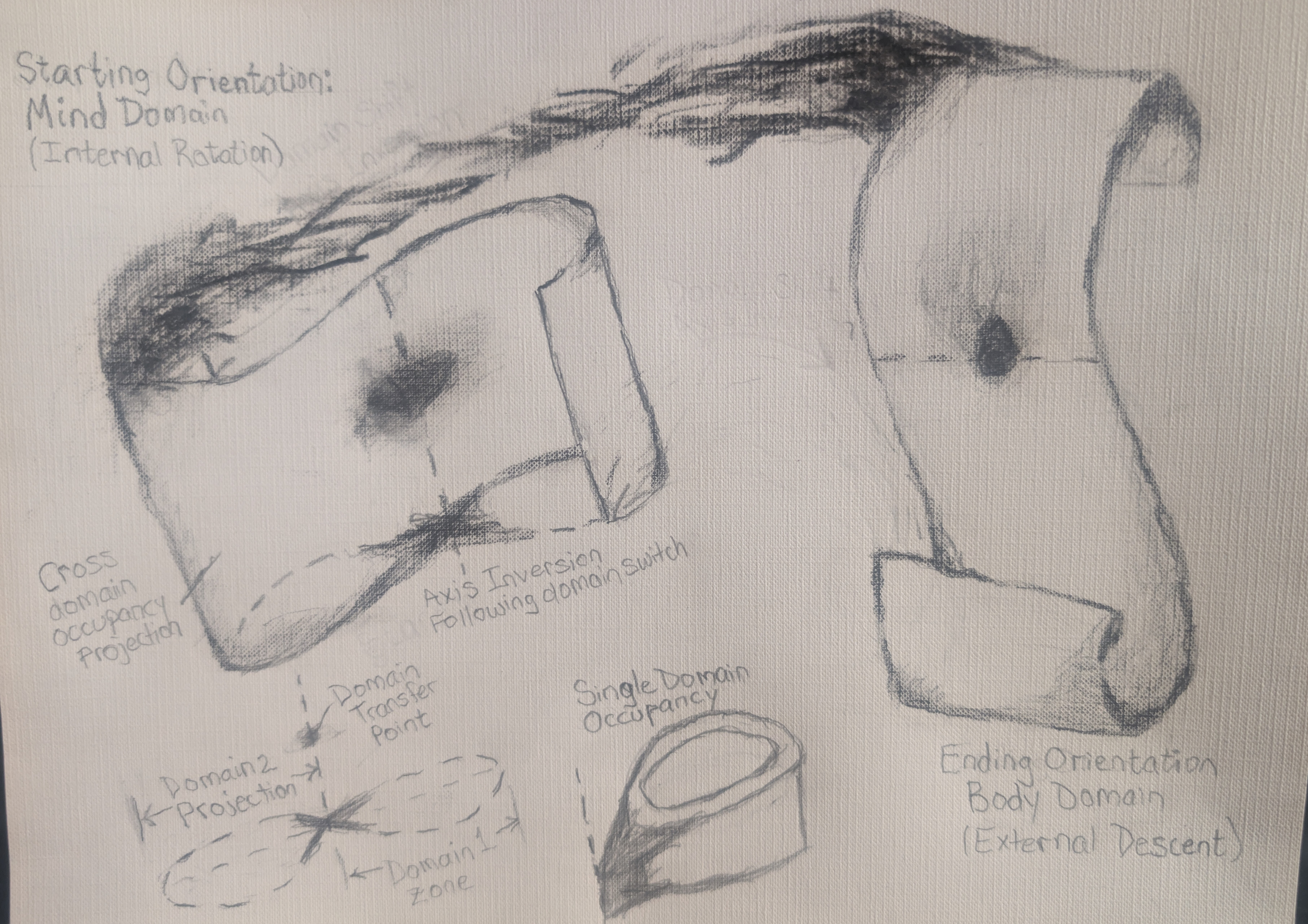
Body and mind handshake
Coherence is present and awareness is shifted between domains (From Mind to Body)
(Upcoming Visual Study)
Body Domain Oriented Exploration

VS4 energy perception
(body domain)
Visual Expressions
Exploring how emotion is felt rather than seen.
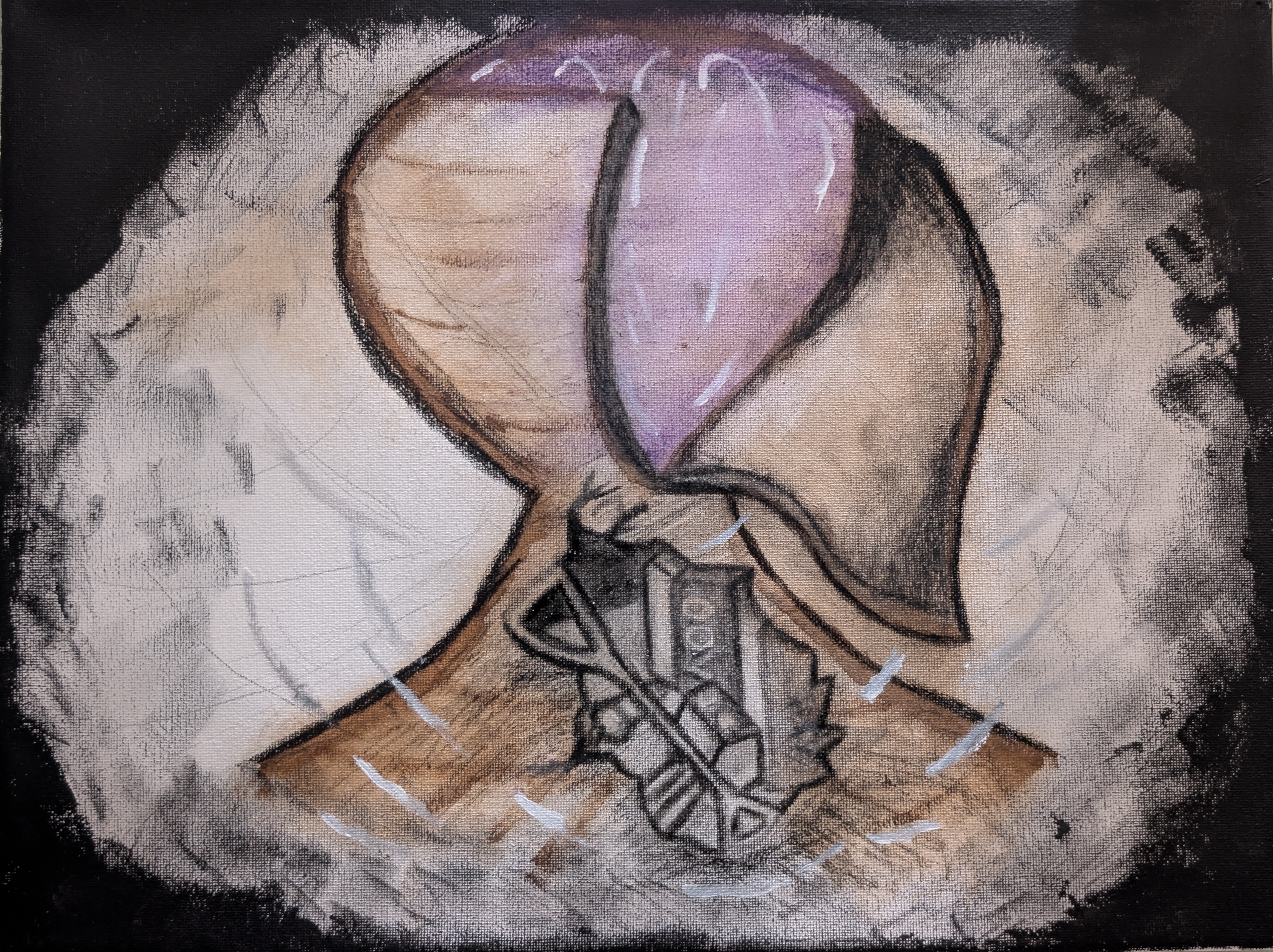
VS1.5. MIND AND BODY HANDSHAKE
Visual Expression
Coherence is present and awareness is shifted between domains (from Body to Mind
This piece is part of the VS1 study – Exploration of Connection
Community Invitation
I approach this work as both engineer and an artist, exploring how emotions behave as energy.
These ideas are observed and evolving; not clinical, but experiential.
If you see connections to your own field or research, I’d love to exchange perspectives.